
 July 30, 2026
Where AI-Driven Digital Marketing Solutions Still Fall Short
AI-driven digital marketing solutions still fall short in several concrete ways, including hallucinated facts in generated content, weak judgment on brand tone, poor performance in heavily regulated industries, and an overreliance on automation that removes necessary human oversight. These gaps matter because most marketing content today treats AI as an unqualified win, when the reality is more nuanced and worth understanding before you build a strategy around it.
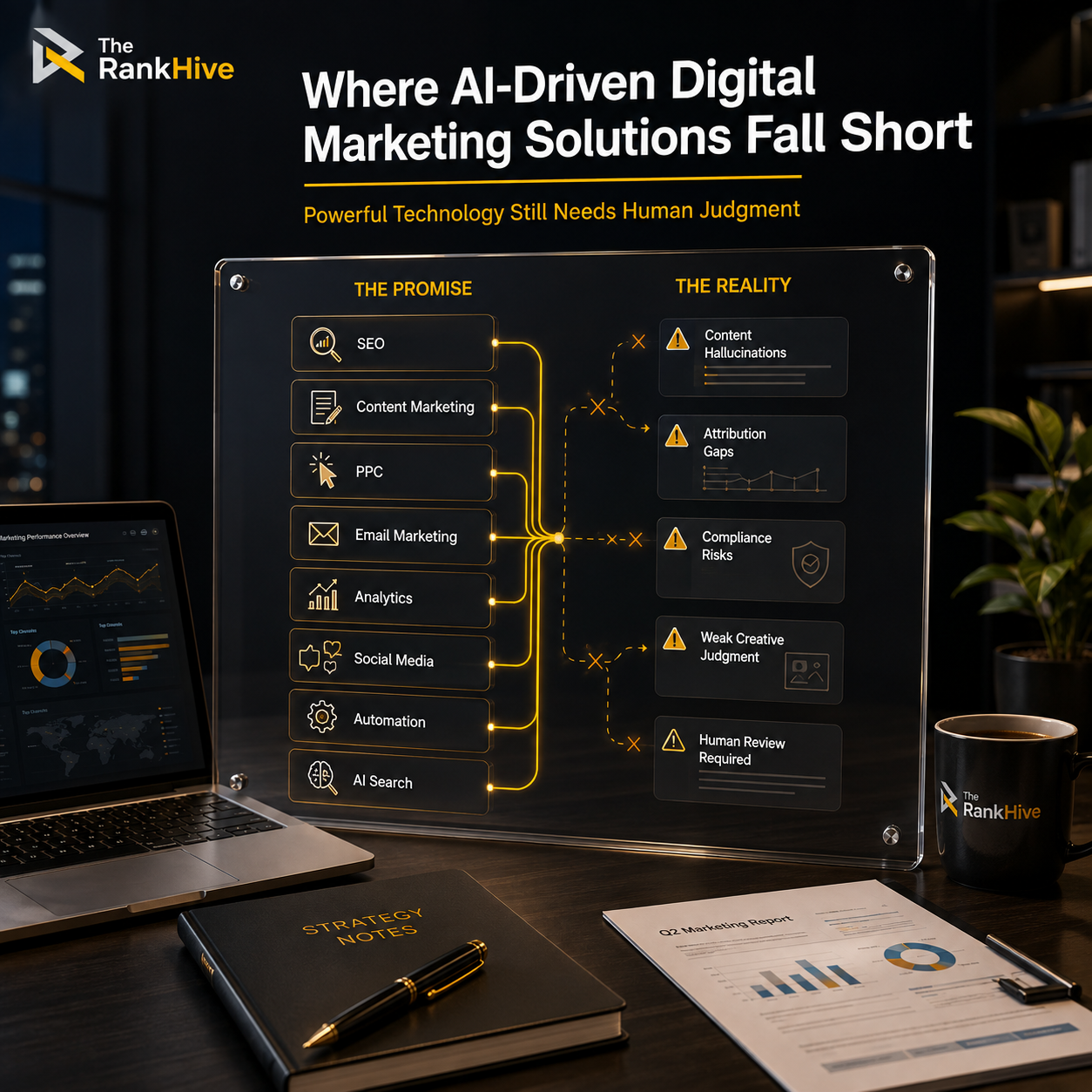
Every business is being told to adopt these tools immediately or risk falling behind competitors. That pressure is real, and the upside is genuine in many cases. But this pressure rarely comes with an honest account of where the technology actually struggles, and that missing half of the conversation is exactly what this article covers.
Why This Conversation Gets Skipped So Often
Most content written about AI-driven digital marketing solutions reads like a sales pitch, because a large share of it is produced by companies selling AI tools or AI-focused agency services. That creates a strong incentive to highlight wins and quietly skip over failure points.
This matters because a marketer making real budget decisions deserves the full picture, not just a highlight reel. Understanding where these tools genuinely struggle helps you deploy them more effectively instead of setting yourself up for disappointment six months into a contract.
- Vendors rarely publish honest limitation data since it hurts sales conversations
- Case studies almost always show best case outcomes, not typical results
- A balanced view leads to smarter tool selection and more realistic internal expectations
The businesses that get burned by AI adoption are rarely the ones asking hard questions upfront. They are usually the ones who accept the pitch at face value.
Where Content Generation Breaks Down
Generative AI tools have gotten remarkably good at producing readable marketing copy quickly, but speed does not always translate into accuracy or genuine usefulness for your specific audience.
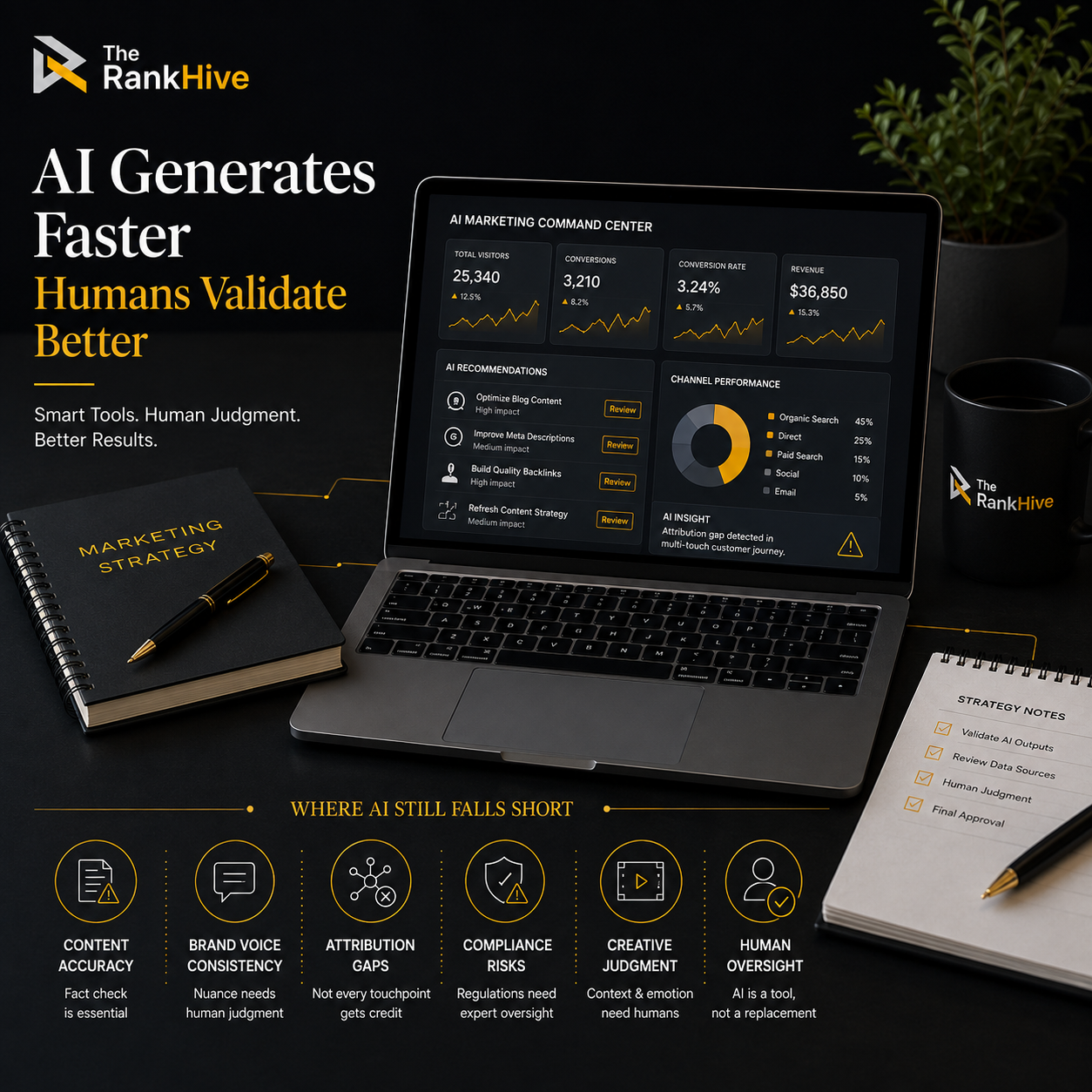
Hallucination remains a real and persistent problem. AI models can confidently state incorrect statistics, misattribute quotes, or invent details that sound entirely plausible but are simply false. Anyone publishing AI assisted content without careful fact checking risks damaging brand credibility in ways that are hard to reverse once a reader catches an obvious error.
- Statistics and data points need independent verification before publishing anything
- Brand voice consistency often requires heavy human editing regardless of tool quality
- Nuanced or emotionally sensitive topics still need a human writer's judgment and empathy
Beyond factual accuracy, there's a subtler issue: AI generated content tends to converge toward similar phrasing and structure across different brands using the same tools, which quietly erodes the distinctiveness that makes content actually memorable. A reader who has seen a dozen AI generated blog intros starts recognizing the pattern, and recognition of a formula undermines trust. This is one of the clearest examples of where AI-driven digital marketing solutions still need a human editor in the loop.
The Personalization Ceiling
Personalization is often marketed as one of the biggest wins of AI-driven digital marketing solutions, and there is real value there, but the underlying technology has clear limits worth understanding before you lean on it heavily.
Most personalization engines work well with structured, predictable data like purchase history or browsing behavior. They struggle far more with context that requires genuine understanding, like recognizing when a customer's situation has changed in a way that makes a standard recommendation inappropriate or even tone deaf.
- Predictable data patterns personalize well, emotional context often does not
- Over-personalization can feel invasive rather than helpful to the customer receiving it
- Edge cases and unusual customer situations frequently get mishandled by automated systems
A well documented example of this failure mode involves grief and loss. A customer who recently lost a family member does not want a cheerful, algorithmically generated email suggesting products based on that person's browsing history. No current system reliably catches this kind of context on its own, which is exactly why a human review layer remains essential for anything customer facing.
Regulated Industries Face a Steeper Gap
Regulated industries expose one of the sharpest limits of AI-driven digital marketing solutions. Industries like healthcare, finance, and legal services face a much bigger challenge when adopting these tools, since compliance requirements leave little room for the confident but occasionally wrong output AI systems can produce.
A general purpose AI writing tool has no built in understanding of HIPAA restrictions, financial disclosure requirements, or legal advertising rules specific to a given state. Content generated without that context can create real legal exposure, not just a minor brand embarrassment that gets quietly corrected.
- Compliance heavy industries need specialized review beyond standard editorial checks
- General purpose tools lack any built in regulatory awareness by default
- The cost of a single AI generated compliance mistake can far exceed any time saved
This gap tends to widen rather than shrink as regulation around AI generated content itself continues developing across different states and industries, adding another layer of complexity businesses in these sectors need to track closely.
Where Predictive Analytics Struggles
Predictive tools built into many AI-driven digital marketing solutions work reasonably well when market conditions stay relatively stable, but they struggle significantly during genuine disruption or unusual demand shifts that fall outside their training data.
A model trained on historical data fundamentally assumes the future will resemble the past. Sudden economic shifts, viral moments, supply chain disruptions, or entirely new competitor behavior can throw these predictions off substantially, sometimes leading to worse decisions than simple human judgment would have produced on its own.
- Historical pattern based predictions weaken considerably during unusual market conditions
- Sudden viral moments or PR events are nearly impossible for models to anticipate accurately
- Overconfidence in predictive output can lead to poor budget allocation decisions
The safest approach treats predictive analytics as one input among several, feeding into a decision a human marketer ultimately makes, rather than an automatic trigger the system executes on its own without oversight.
Creative Tools Still Need Human Direction
Interest has grown quickly around AI powered video editing and creative tools for marketing teams, and the underlying technology has improved substantially over the past two years, but creative judgment remains a genuine and persistent gap.
These tools excel at mechanical tasks like cutting footage, adding captions, or generating basic transitions quickly and cheaply. They struggle far more with the creative instinct needed to know which specific moment in a video is actually compelling, or how a particular audience will emotionally respond to a given edit versus a slightly different one.
- Mechanical editing tasks are handled well by current generation tools
- Creative instinct and audience emotional response still require human judgment
- Brand consistency across a growing video library needs ongoing human oversight
Marketing teams get the strongest results treating these tools as efficiency boosters for an already skilled editor, freeing up time for the creative decisions that actually matter, rather than expecting a full creative replacement. This is a case where AI-driven digital marketing solutions genuinely speed up production without replacing the person doing it.
The Attribution Problem Few People Discuss
Many providers of AI-driven digital marketing solutions promise clean attribution connecting every marketing dollar to a specific outcome, but the reality of cross channel customer journeys makes this far messier than most sales pitches suggest.
Customers rarely convert through a single, clean path. They see an ad, later read a blog post, then get a recommendation from a friend, and finally search for the brand directly before buying weeks later. Attribution models make educated guesses about which touchpoint deserves credit, but these guesses can be wrong in ways that quietly skew budget decisions over months without anyone noticing.
- Multi touch customer journeys resist clean, confident attribution by nature
- Attribution models make underlying assumptions that are not always visible to the marketer
- Overconfidence in attribution data can lead to defunding channels that actually work well
Understanding this limitation prevents a business from making significant budget cuts based on attribution data that looks far more precise and certain than it actually is underneath the surface.
AI Visibility Claims Deserve Real Scrutiny
This is one of the newest frontiers for AI-driven digital marketing solutions, and also one of the least proven. A growing number of vendors now position themselves as experts in getting brands cited inside ChatGPT, Perplexity, and Google's AI Overviews, promising strong visibility inside AI generated answers.
This space is genuinely new enough that measurement tooling remains immature across the entire industry, not just among smaller or less established providers. Any vendor claiming precise, guaranteed AI citation tracking should be questioned closely, since the underlying data infrastructure for this kind of measurement is still actively being built industry wide, including by the largest players.
- AI citation tracking tools remain early stage and inconsistent across providers
- Guaranteed AI visibility promises deserve real skepticism given the immature tooling
- Genuine progress here usually looks incremental, not dramatic overnight change
A cautious, evidence based approach to these claims protects your budget from vendors overselling a genuinely new and still largely unproven measurement category.
Small and Local Businesses Face Different Gaps
Tools built for small local businesses, including home service providers, often get designed with enterprise assumptions baked in from the start, creating a real mismatch for smaller operations with tighter budgets and simpler day to day needs.
Many tools assume access to large historical datasets, dedicated marketing staff, or budgets that a small home service business simply does not have available. The result is often an oversized, overpriced tool solving problems the business does not actually have, while ignoring the simpler needs that matter most, like accurate local search visibility and honest, consistent review management.
- Enterprise built tools often overshoot what a small business genuinely needs
- Simple visibility and review management usually matter more than advanced automation
- Pricing models rarely scale down realistically for smaller local operations
Small businesses are often better served starting with foundational, simpler tools addressing their actual bottlenecks before layering in more advanced automation they may not be ready to use effectively yet. Small businesses get more value from AI-driven digital marketing solutions once they start with the basics first.
Generative Tools and Their Quality Ceiling
Interest in generative AI-driven digital marketing solutions has exploded across nearly every industry, but even the strongest tools available today hit a real quality ceiling once content moves beyond routine, formulaic tasks.
Product descriptions, basic social captions, and simple email subject lines tend to work reasonably well with minimal editing required. Genuinely persuasive long form content, nuanced brand storytelling, and anything requiring real subject matter expertise still needs substantial human involvement to reach a quality level actually worth publishing to a real audience.
- Routine, formulaic content sees the strongest performance from current tools
- Persuasive, nuanced writing still needs significant human involvement throughout
- Subject matter expertise cannot currently be fully replicated by general purpose systems
Recognizing this ceiling early helps set realistic expectations for how much time these tools genuinely save versus how much editing work still remains necessary afterward.
When Newer Platforms Overpromise Early
New entrants promising cutting edge AI-driven digital marketing solutions deserve extra scrutiny before any real commitment.
This is not unique to any single platform or vendor. It reflects a broader pattern common across this fast moving category, where marketing hype frequently outpaces actual product maturity by a wide margin. Evaluating any new entrant carefully, rather than adopting based on launch buzz alone, protects a business from becoming an unpaid beta tester for a product still working out fundamental issues.
- Newer platforms deserve extra scrutiny before any major budget commitment
- Launch hype often outpaces actual tested product capability significantly
- Requesting real, verifiable case studies matters more with newer, less established tools
A cautious rollout, starting with a smaller pilot project before a full commitment, meaningfully reduces risk when evaluating any less established platform entering this space.
Getting the Balance Right
None of these limitations mean AI-driven digital marketing solutions are not worth using. It clearly is, when deployed with realistic expectations and appropriate human oversight built into the process from the start rather than added as an afterthought.
The businesses seeing the strongest results treat these tools as genuine force multipliers for skilled marketers, not full replacements for strategic thinking and editorial judgment. That balance, more than any single tool choice, tends to separate strong outcomes from disappointing ones over time.
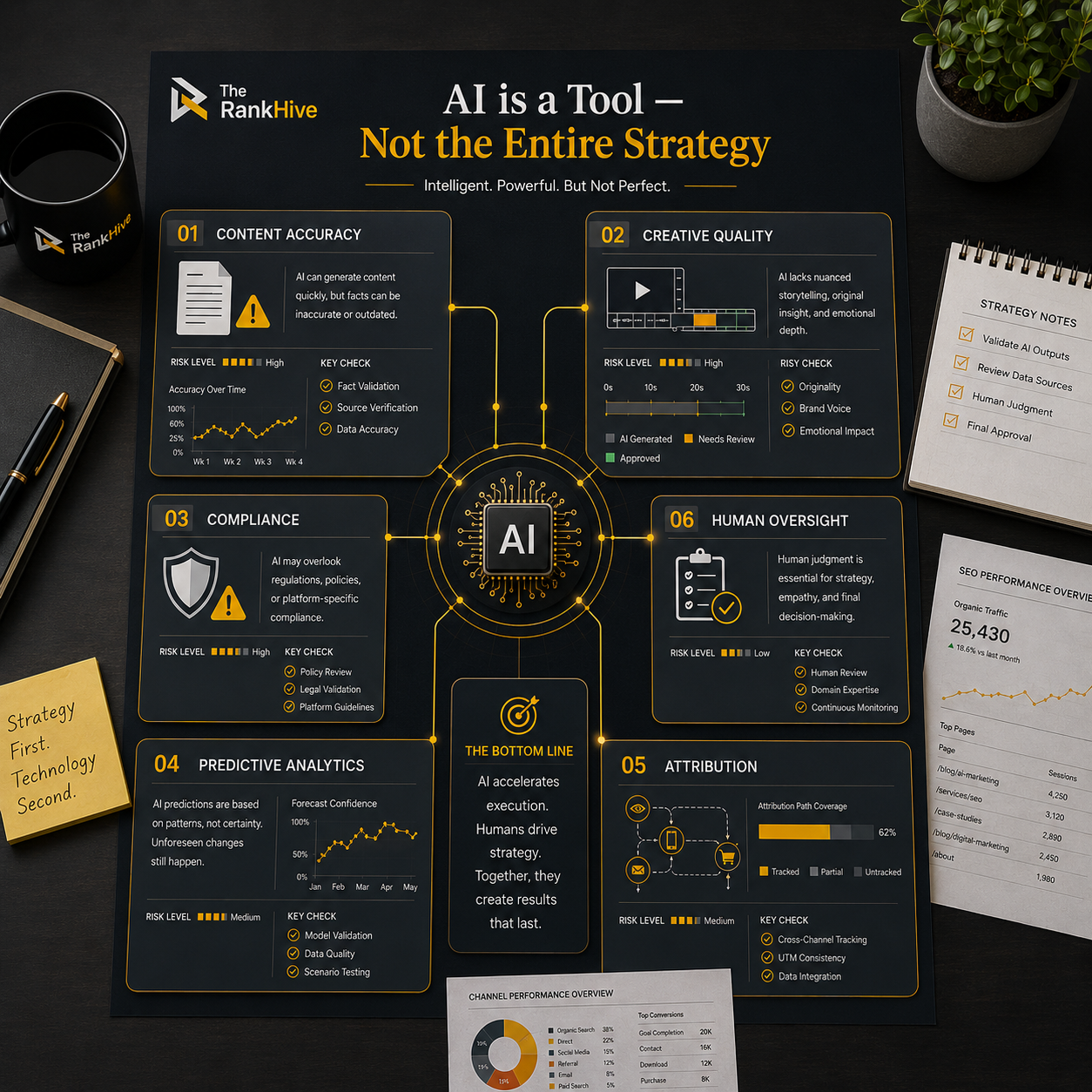
- Treat AI output as a draft or starting point, never a finished product
- Keep human review in place for anything customer facing or compliance sensitive
- Stay skeptical of guaranteed results in measurement areas that are still genuinely new
Frequently Asked Questions
Are AI-driven digital marketing solutions reliable for marketing teams?
They are reliable for routine, well defined tasks, but still require human oversight for accuracy, brand tone, and compliance sensitive content. Treating output as a starting point rather than a finished product produces the most consistent results.
Can AI fully replace a marketing team?
No, these tools handle repetitive execution well but still lack the strategic judgment and creative instinct a skilled marketing team provides. Most businesses see the best results combining AI efficiency with experienced human oversight.
Why does AI generated marketing content sometimes contain errors?
AI models can generate confident but inaccurate statements, a pattern known as hallucination, especially with specific statistics or claims. Independent fact checking remains essential before publishing anything AI assisted.
Do small businesses need the same tools as large enterprises?
No, many enterprise built tools are oversized for smaller operations with simpler needs and tighter budgets. Small businesses often get better results starting with foundational tools before adding advanced automation.
How do I know if a vendor is overselling their AI capabilities?
Ask for real, verifiable case studies with actual starting numbers, not just impressive sounding percentages. Be especially cautious of any vendor guaranteeing precise results in measurement areas that remain genuinely new industry wide.
Want help figuring out where AI actually fits into your marketing strategy? Reach out to The RankHive.
Recent Posts
 September 09, 2026
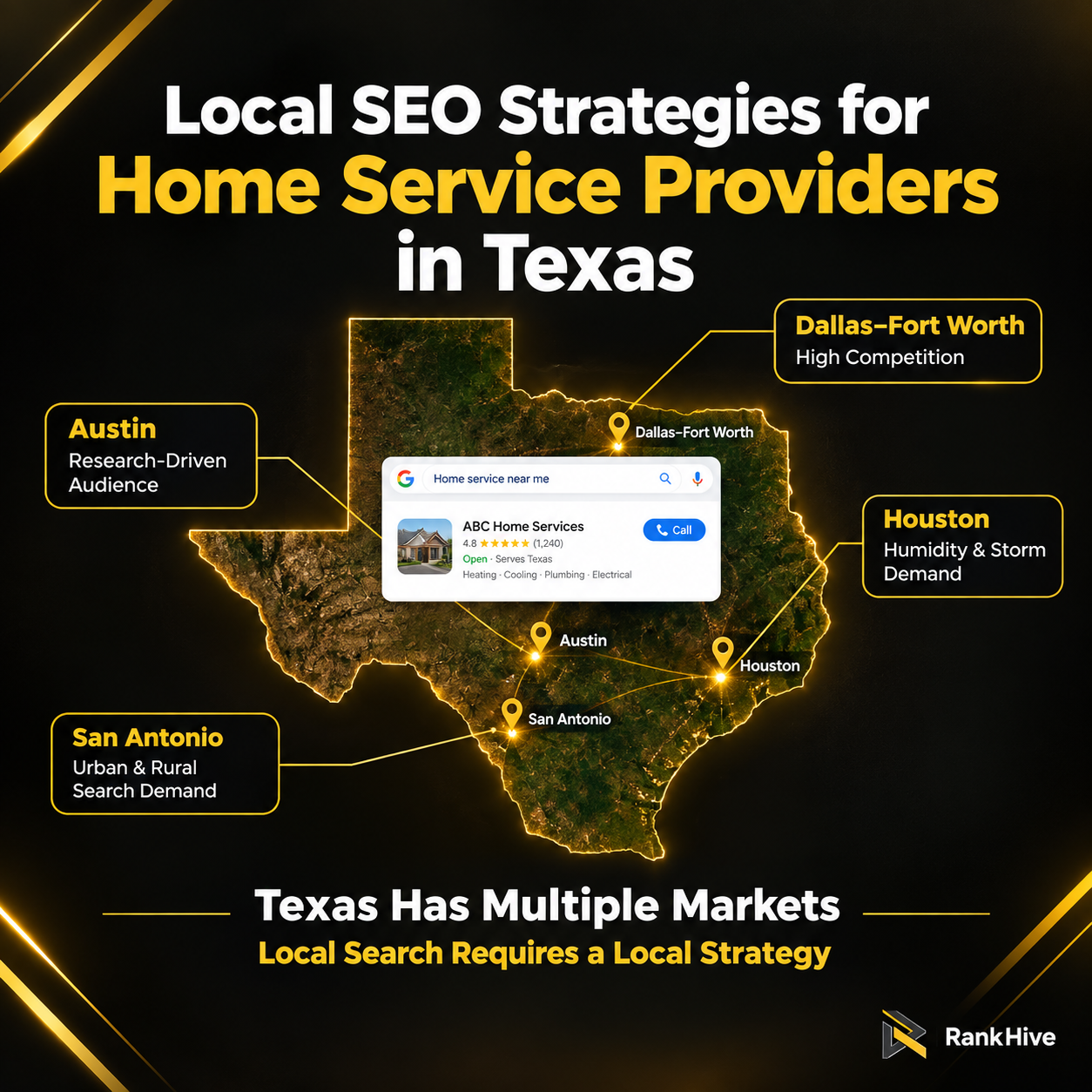
Local SEO Strategies for Home Service Providers in Texas
Local SEO strategies for home service providers in Texas help HVAC, plumbing, and roofing companies rank higher, appear on Maps, and win more local calls.
Read More
 September 07, 2026
Home Service Franchise Local SEO for North Carolina
Home service franchise local SEO helps North Carolina multi-location brands rank higher, dominate Google Maps, and turn nearby searches into real calls.
Read More September 05, 2026
Home Services SEO in Ohio That Turns Searches Into Calls
Home services SEO helps Ohio HVAC, plumbing, roofing, and cleaning companies rank higher on Google, show up on Maps, and win more local calls year-round.
Read More September 02, 2026
Local SEO for Home Services in Georgia That Actually Ranks
Local SEO for home services helps Georgia HVAC, plumbing, roofing, and electrical companies rank higher, get found nearby, and win more calls this season.
Read More