 July 23, 2026
SEO vs Digital Marketing: Which One Actually Drives More Revenue?
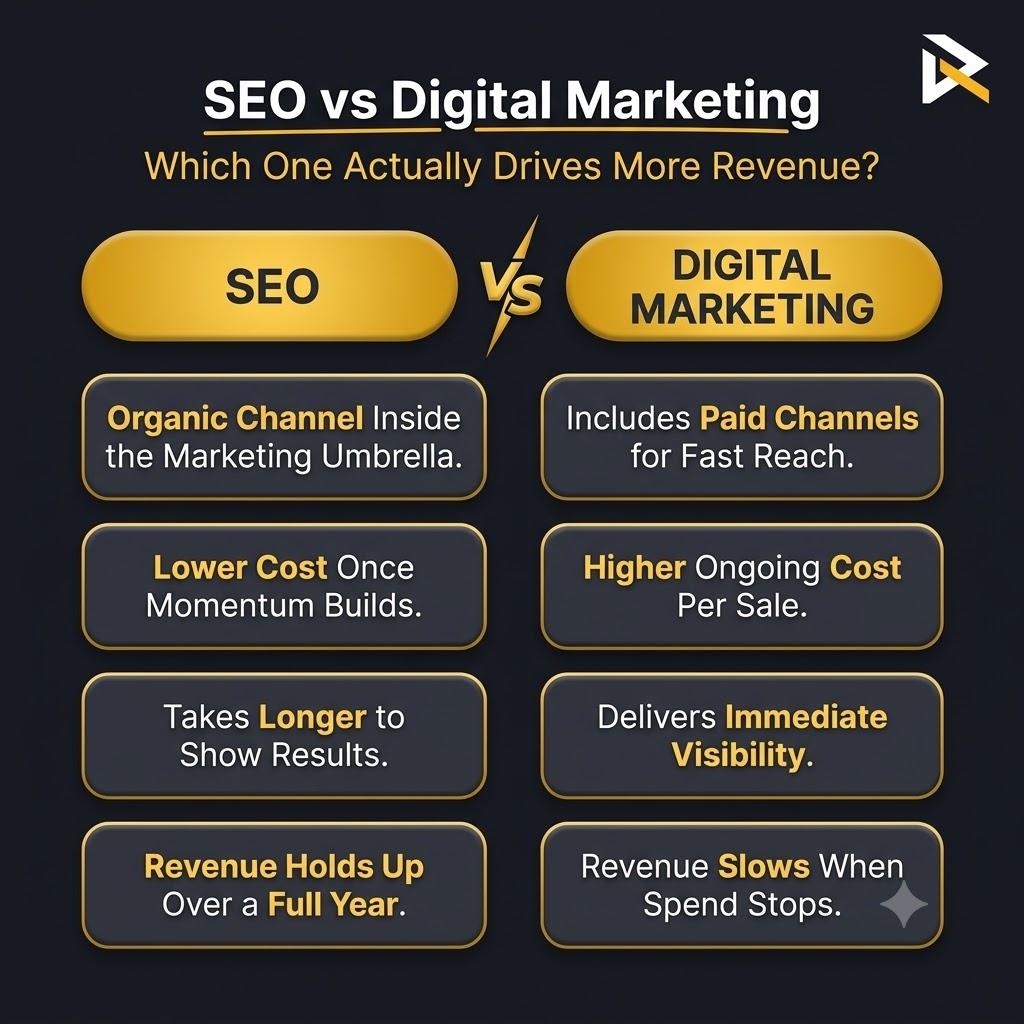
SEO vs digital marketing is not really a competition, since SEO is one channel inside the larger digital marketing umbrella, but when it comes to revenue, the two produce very different results on very different timelines. Digital marketing as a whole can generate faster, more immediate sales through paid channels, while SEO tends to produce lower cost, longer lasting revenue once it gains momentum.
Business owners rarely get a straight answer on which one actually pays off faster, and which one holds up better over a full year. This article breaks that down honestly, using real numbers rather than vague advice, so you can decide where your next marketing dollar should actually go.
Understanding the Real Comparison
The seo vs digital marketing debate confuses a lot of business owners because SEO is not actually a separate category sitting outside everything else. It sits inside digital marketing alongside paid ads, email, social media, and content.
The real question underneath this comparison is not which one to pick, but how much of your budget and attention should go toward SEO specifically versus everything else digital marketing includes.
- SEO focuses entirely on organic visibility in search engines
- Digital marketing covers every other paid and owned channel working alongside it
- The seo vs digital marketing which is better question depends heavily on your timeline and current cash flow
Framing it this way makes the decision far easier to reason through, rather than treating it as an either or choice that does not actually reflect how these channels function.
Why This Comparison Gets Misunderstood So Often
Part of the reason the seo vs digital marketing debate keeps resurfacing is that both terms get used loosely in everyday conversation. Business owners hear "we need better SEO" and "we need better digital marketing" used almost interchangeably by different vendors, which creates confusion about what they are actually paying for.
This matters more than it seems, since a vague understanding of the seo vs digital marketing relationship often leads to duplicated spending, gaps in strategy, or paying two different vendors for overlapping work without realizing it.
- Vendors sometimes use broad language to avoid revealing narrow expertise
- Overlapping service descriptions make it hard to compare quotes accurately
- A clear internal understanding of this distinction protects your budget
Getting clarity on this upfront saves real money before a single dollar gets spent.
Which One Drives Revenue Faster
Paid digital marketing channels almost always produce revenue faster than SEO. A well built Google Ads or Meta campaign can start generating sales within days of launching.
SEO works on a completely different timeline. Meaningful ranking movement typically takes three to six months, and stronger revenue impact often does not show up until closer to six to twelve months.
- Paid campaigns generate quick, immediate sales but stop the moment spending stops
- SEO builds slower but keeps generating revenue without ongoing cost per click
- Businesses with tight cash flow often need paid channels first while SEO builds in the background
This is exactly why the seo vs digital marketing comparison should never be framed as either or. Speed and sustainability come from different places, and expecting one to behave like the other usually leads to disappointment.
Which One Produces Better Long Term Returns
Cost per lead tells a clearer story than most marketing pitches. Paid channels typically cost more per lead the longer a campaign runs, since competition for the same keywords or audiences increases costs over time.
SEO behaves in reverse. Once a page ranks and holds its position, the cost per lead keeps dropping the longer that page stays live, since there is no ongoing per click cost attached to organic traffic.
- Paid acquisition costs tend to rise over time as competition increases
- Organic SEO traffic becomes cheaper per lead the longer a page holds its ranking
- A mature SEO strategy often produces the strongest long term return of any single channel
This is the core reason SEO deserves a serious place in any seo vs digital marketing revenue conversation, even though it takes longer to show results than paid channels do.
What Digital Marketing and SEO Services Actually Include
Understanding what you are actually paying for makes this comparison less abstract. Digital marketing and seo services typically get bundled together, but they cover different work entirely.
Digital marketing vs seo services breaks down roughly like this. Broader digital marketing services usually include paid advertising management, social media strategy, email campaigns, and conversion tracking across channels. SEO services focus specifically on keyword research, technical fixes, content creation, and link building aimed at organic rankings.
- Paid media management covers ad creative, targeting, and budget optimization
- Email marketing covers list building, automation, and campaign design
- SEO services cover technical audits, content strategy, and organic visibility work
Knowing this breakdown helps you evaluate a proposal honestly instead of assuming all agency pricing covers the same scope of work, which is a common and costly mistake.
How SEO and SEM Work Together
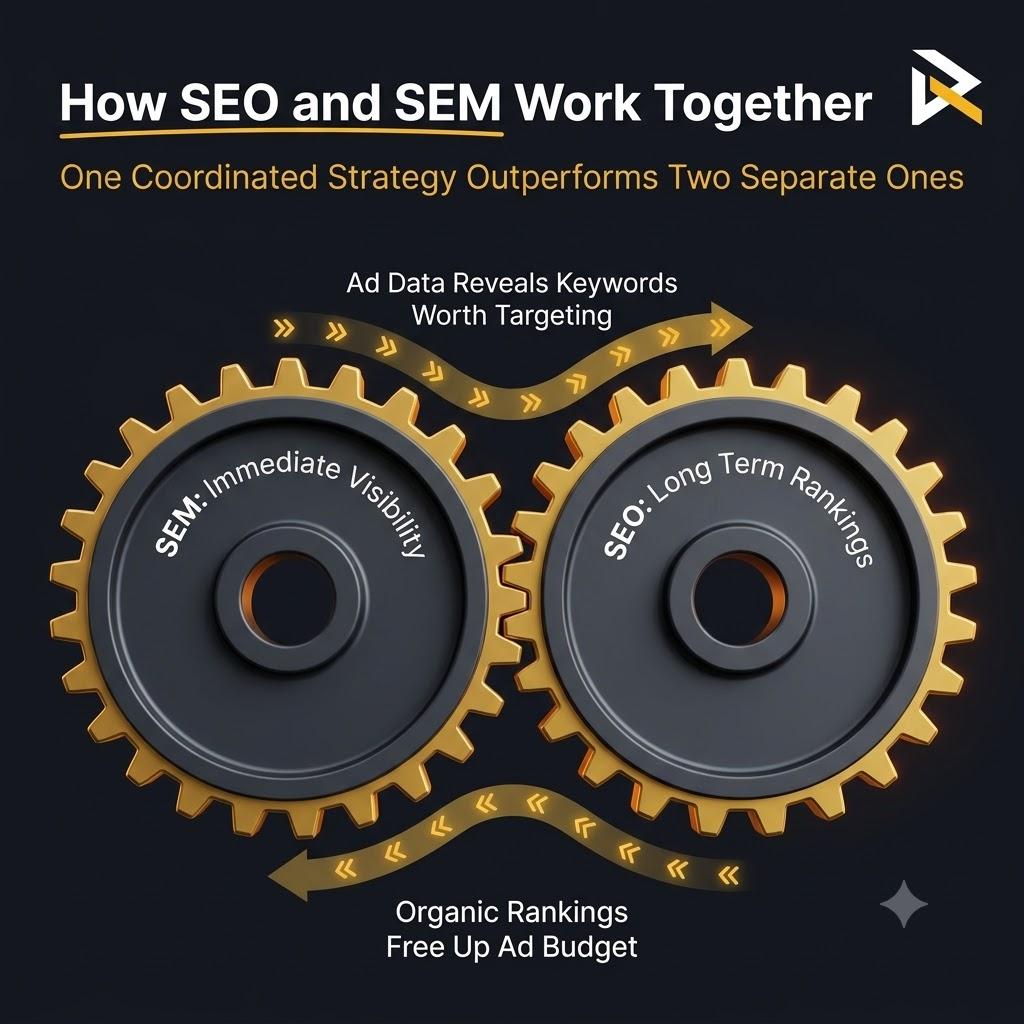
A common point of confusion inside this topic involves paid search itself. Seo and sem in digital marketing often get treated as competitors, but they actually complement each other extremely well.
SEM, or search engine marketing, refers specifically to paid search ads. SEO and SEM occupy the same search results page, just in different positions. Running both simultaneously means you can capture both the paid ad space and the organic listings for the same valuable keywords.
- Paid search captures immediate visibility while SEO rankings are still building
- Ranking organically for a keyword you also target with ads increases total page real estate
- Data from paid search campaigns can reveal which keywords are worth targeting organically next
Businesses that treat these as one coordinated strategy consistently outperform those running them separately, since each channel feeds useful data back into the other.
How AI Search Is Changing This Comparison
Search itself has changed enough that the seo vs digital marketing conversation now needs to include a newer piece. What is geo in digital marketing vs seo is a question more business owners are asking as AI Overviews and AI chat tools become common research destinations.
Generative Engine Optimization, or GEO, focuses on getting your brand mentioned or cited directly inside AI generated answers, rather than earning a click through a traditional search listing. This overlaps heavily with strong SEO, since AI tools tend to pull from content that already ranks well organically.
- Strong technical SEO often becomes the foundation that makes AI citation possible
- Clear, direct answers near the top of a page help both traditional rankings and AI extraction
- Ignoring this shift risks losing visibility in a fast growing research channel
Any modern digital marketing strategy now needs to account for this alongside traditional SEO and paid channels, since the two are becoming harder to separate cleanly.
Industry Example: Local Service Businesses
Real numbers become clearer with a specific example. Dental seo and digital marketing offers a useful case, since dental practices compete heavily on both local search and paid visibility at the same time.
A dental practice relying only on paid ads for new patient acquisition often sees costs per new patient climb steadily, especially in competitive metro areas. A practice investing in local SEO alongside paid ads typically sees a lower blended cost per patient within the first year, since organic visibility starts contributing meaningful traffic without an ongoing per click cost.
- Local SEO helps a dental practice appear in map pack results for near me searches
- Paid ads fill the gap while organic rankings are still building authority
- Patient review generation strengthens both local SEO rankings and ad quality scores simultaneously
This pattern repeats across most local service industries, not just dental practices, and it illustrates the seo vs digital marketing revenue question in a very concrete way.
Local Agencies and Combined Service Models
Many businesses eventually look for a single local digital marketing seo and ppc agency rather than managing separate vendors for each channel. This combined approach solves a real coordination problem that costs businesses money without them realizing it.
When SEO and paid search run through separate teams with no shared strategy, budget often gets wasted bidding on keywords that are already ranking organically, or ignoring paid opportunities for terms where organic rankings are still weak.
- A combined agency model shares keyword data across both channels
- Budget allocation improves when one team sees the full picture instead of two disconnected reports
- Reporting becomes clearer when revenue is tracked across channels rather than in separate silos
This is often the single biggest efficiency gain available to a business running both strategies at once, and it directly affects how the seo vs digital marketing split should be budgeted.
How These Two Channels Work Together
Understanding how seo and digital marketing work together in practice removes most of the confusion around this comparison entirely.
Content built for SEO purposes often performs well when shared through email and social channels. Paid campaign data reveals exactly which keywords and messaging resonate, which then informs organic content strategy. Reviews generated through customer outreach improve both local SEO signals and social proof used in paid ad creative.
- SEO content feeds material that paid social and email campaigns can reuse
- Paid campaign performance data reveals proven messaging worth building organic content around
- Customer reviews strengthen both organic local rankings and paid ad credibility
None of these channels perform their best in isolation. The strongest results come from treating them as one connected system rather than competing budget lines fighting for the same dollars.
Common Mistakes When Choosing Between the Two
Plenty of businesses approach the seo vs digital marketing decision the wrong way, and a few patterns show up repeatedly.
Some businesses commit fully to paid channels and never build any organic foundation, which means costs never decrease no matter how long the business operates. Others invest heavily in SEO too early, before the business has enough cash flow to survive the months it takes for organic results to materialize.
- Relying entirely on paid channels with no organic growth plan
- Investing in SEO before the business can financially wait for results
- Switching strategies every few months before either channel has time to work
- Failing to track which channel actually closes revenue, not just generates clicks
Avoiding these mistakes matters more than picking a perfect ratio between the two channels from day one.
How Company Size Changes the Right Approach
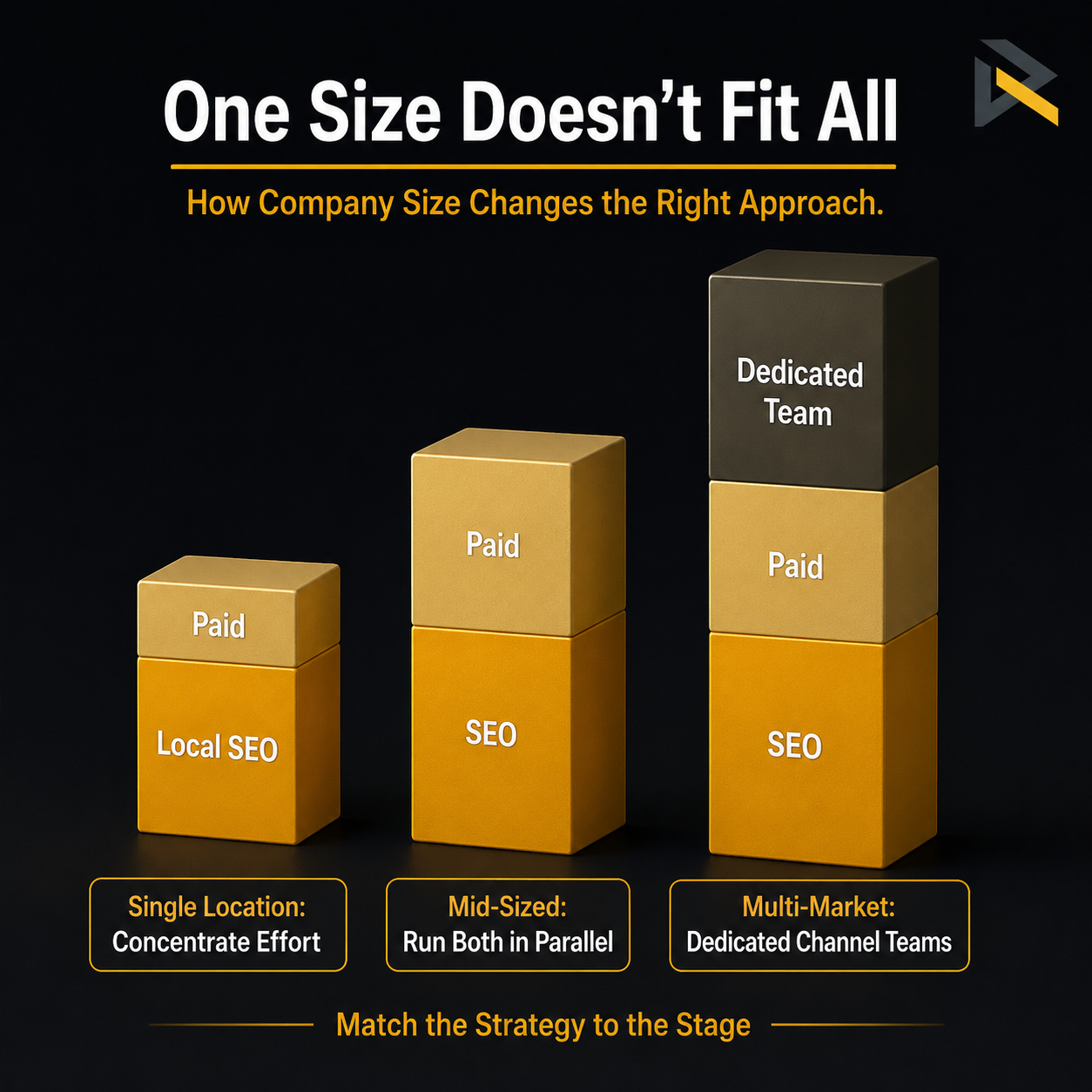
The right split between seo vs digital marketing channels does not stay fixed as a business grows. What works for a five person team looks different from what works once a company scales past fifty employees or opens multiple locations.
- Small, single location businesses often see the fastest wins concentrating on local SEO and a single paid channel rather than spreading across five platforms
- Mid sized businesses with an established customer base can usually support SEO and paid running in parallel, since both have room to compound
- Larger, multi market businesses typically need dedicated teams or partners for each channel, since coordination complexity grows faster than headcount
Recognizing which stage your business sits in prevents two common mistakes, applying an enterprise level strategy too early, or staying stuck in a small business approach long after you have outgrown it.
Measuring What Actually Matters
Tracking the wrong numbers leads to poor decisions about where to invest next. Vanity metrics like impressions or social followers rarely reflect actual revenue impact.
- Cost per lead calculated separately for paid channels versus organic SEO traffic
- Actual closed revenue attributed to each channel, not just clicks or form fills
- Customer lifetime value differences between paid acquired and organically acquired customers
Businesses that track revenue this specifically make far better decisions about where their next marketing dollar should go, and this clarity is what ultimately settles the seo vs digital marketing question for their specific situation.
Frequently Asked Questions
Which is best, SEO or digital marketing?
Neither is inherently better, since SEO is one part of the broader digital marketing picture. The right mix depends on your timeline, budget, and how quickly you need revenue results.
Does SEO come under digital marketing?
Yes, SEO is one channel within the broader digital marketing field, alongside paid media, email, and social. It focuses specifically on earning organic visibility in search engines.
Can ChatGPT do SEO?
ChatGPT can assist with keyword ideas, content drafts, and structural suggestions, but it cannot perform technical fixes or build backlinks. Real SEO results still require hands on strategy and implementation.
What are the 7 types of digital marketing?
The main types include SEO, paid search, social media marketing, email marketing, content marketing, affiliate marketing, and mobile marketing. Each plays a different role in a complete digital marketing strategy.
Want a clearer read on where your marketing budget should actually go? Reach out to The RankHive to talk it through.
Recent Posts
 September 09, 2026
Local SEO Strategies for Home Service Providers in Texas
Local SEO strategies for home service providers in Texas help HVAC, plumbing, and roofing companies rank higher, appear on Maps, and win more local calls.
Read More
 September 07, 2026
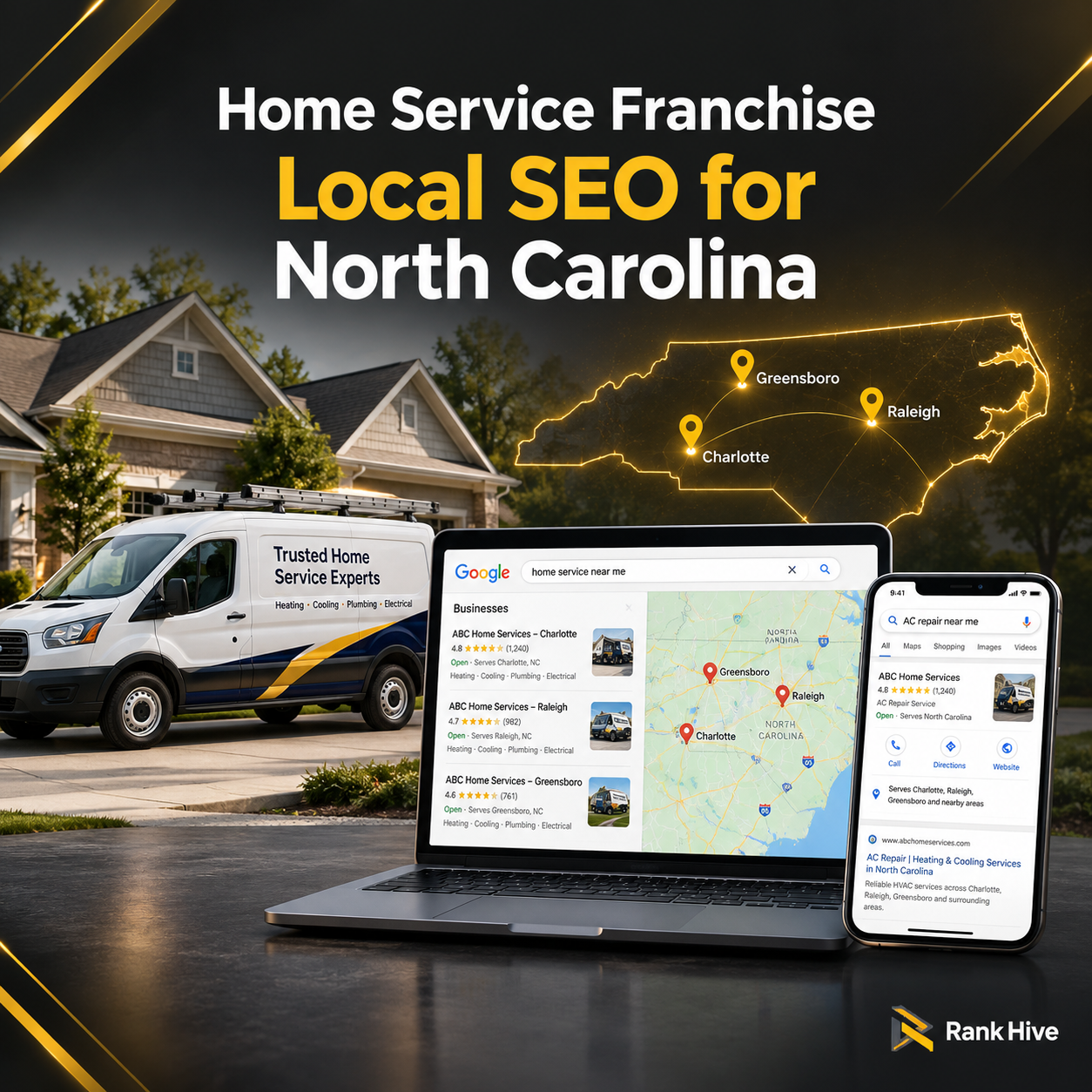
Home Service Franchise Local SEO for North Carolina
Home service franchise local SEO helps North Carolina multi-location brands rank higher, dominate Google Maps, and turn nearby searches into real calls.
Read More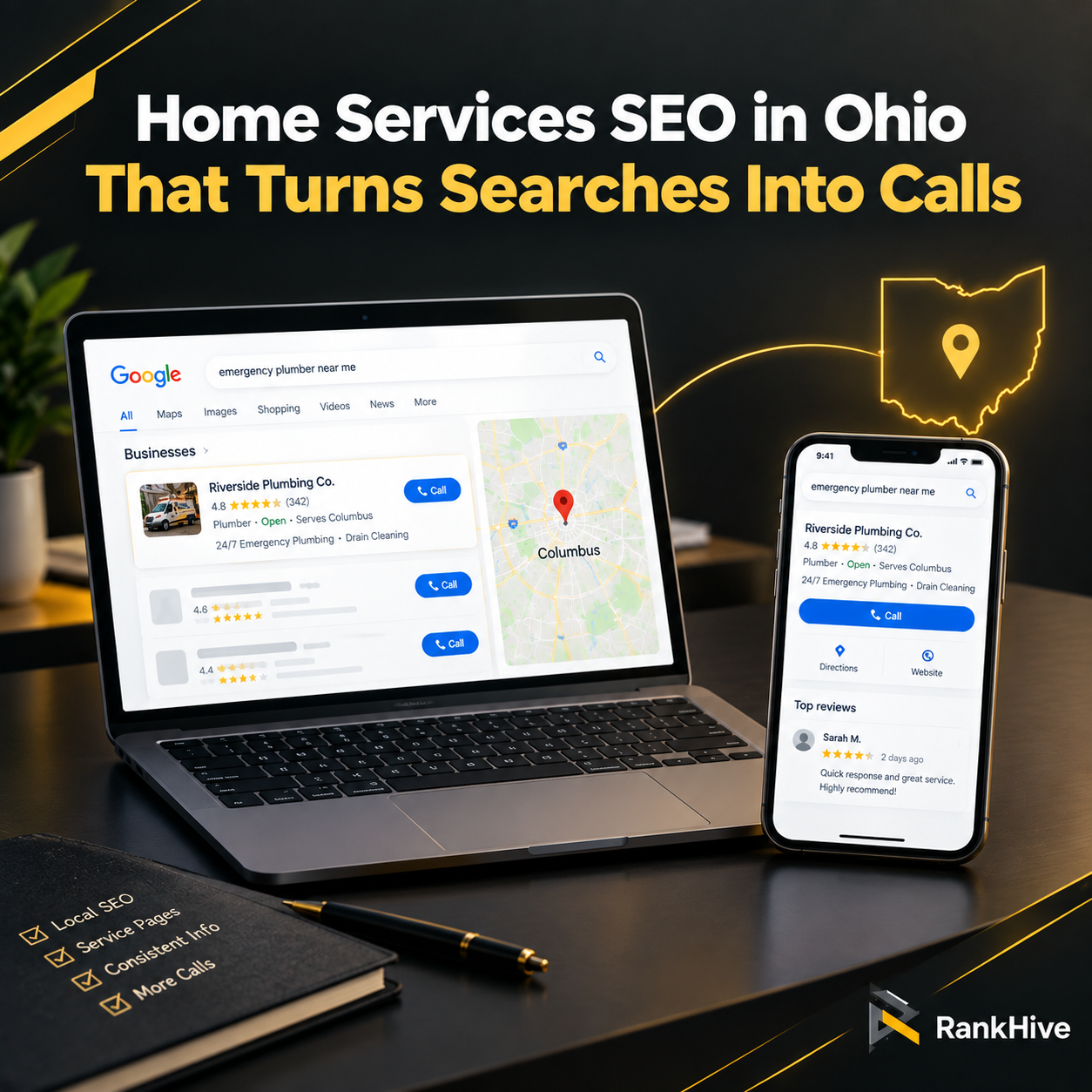 September 05, 2026
Home Services SEO in Ohio That Turns Searches Into Calls
Home services SEO helps Ohio HVAC, plumbing, roofing, and cleaning companies rank higher on Google, show up on Maps, and win more local calls year-round.
Read More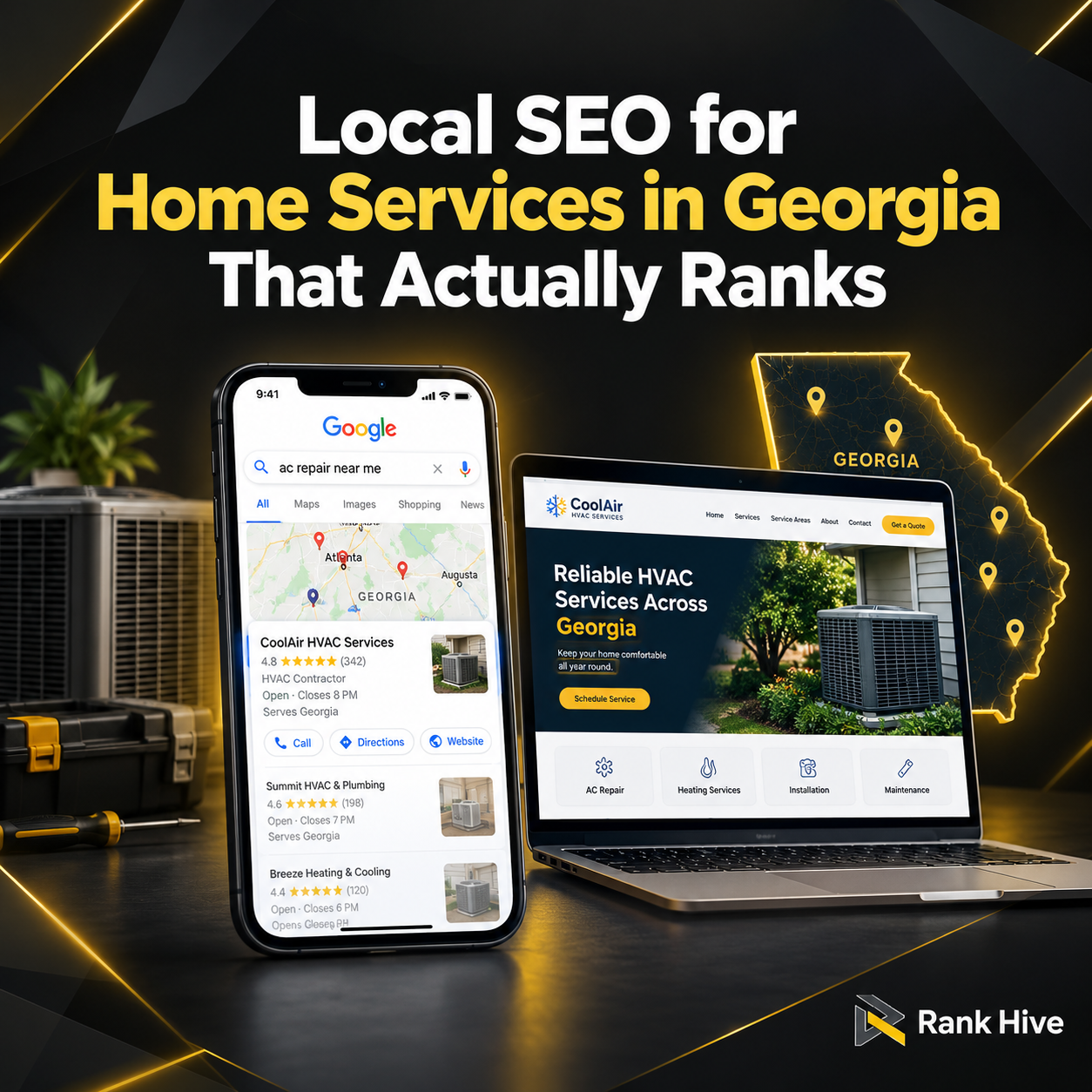 September 02, 2026
Local SEO for Home Services in Georgia That Actually Ranks
Local SEO for home services helps Georgia HVAC, plumbing, roofing, and electrical companies rank higher, get found nearby, and win more calls this season.
Read More